

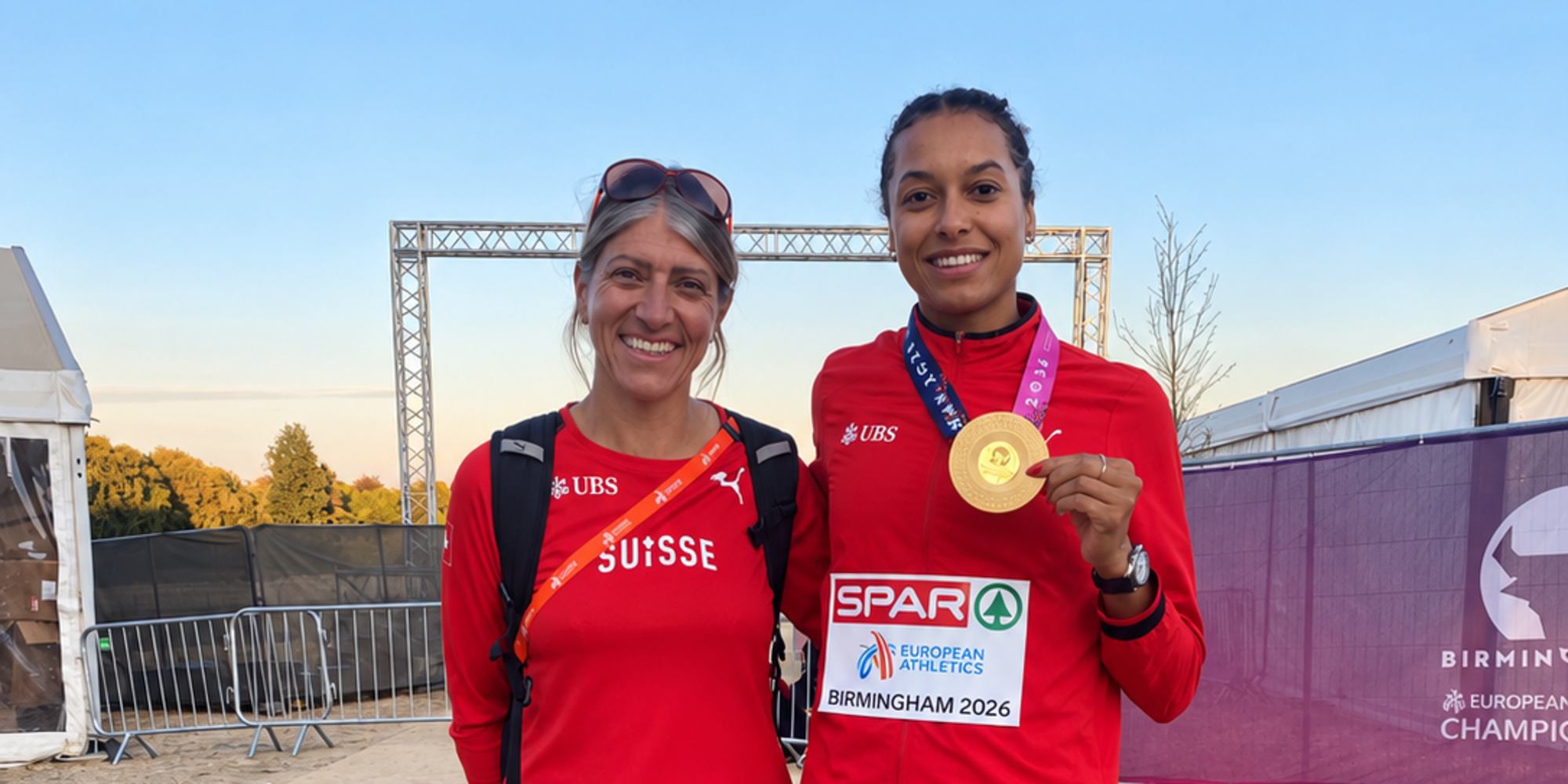


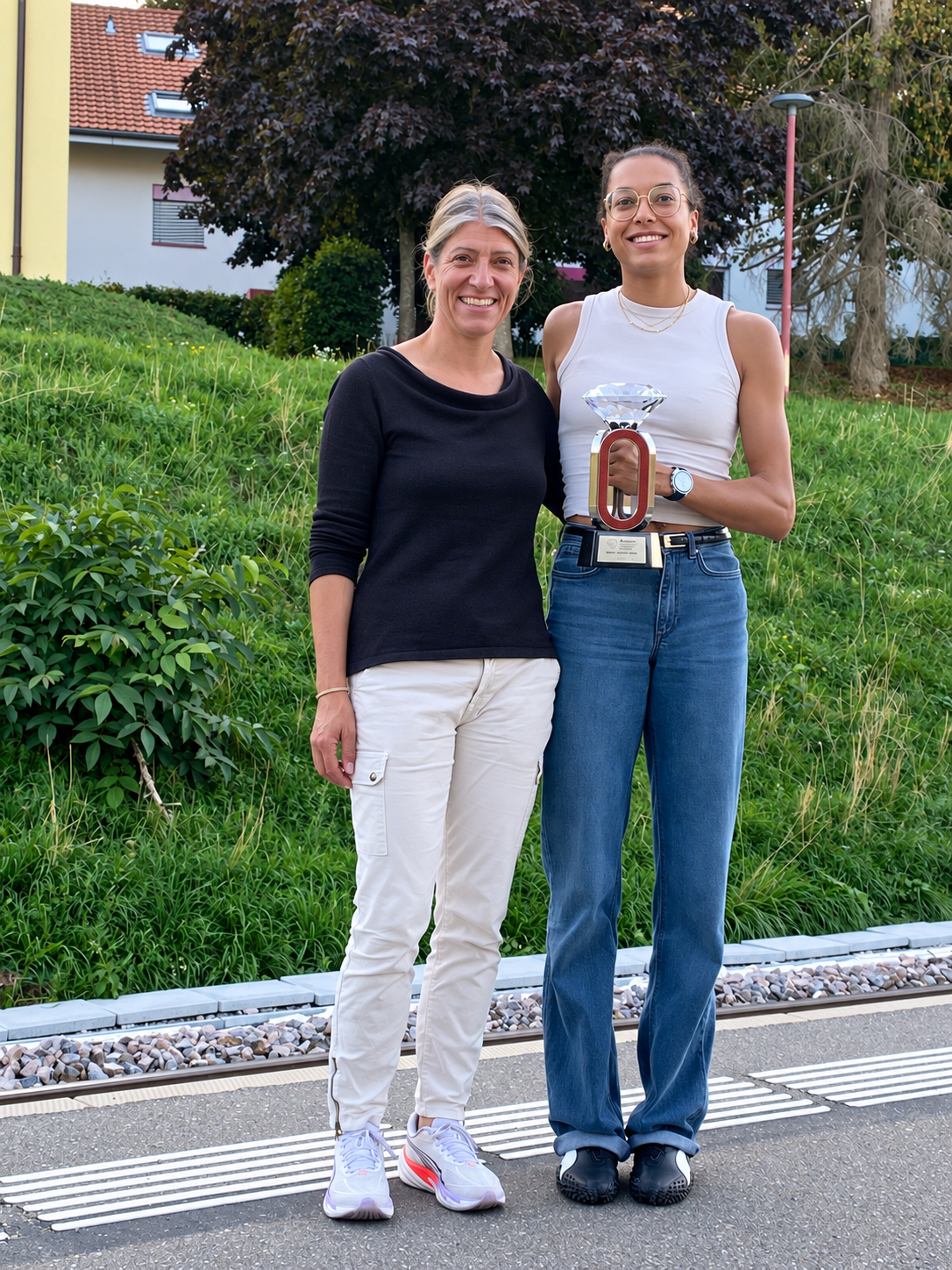
Christiane Berset Nuoffer has coached Audrey Werro since she was nine, taking her from playful club sessions to the highest level of international athletics.
Their 13-year relationship offers a rare view of what long-term athlete development actually looks like, and why the coach has to keep developing too.
“You should not push all the performance levers too early.”
It’s perhaps a counter-intuitive piece of advice from Christiane, given where the athlete she has coached since childhood has ended up.
Audrey Werro was nine when she first joined one of Christiane’s youth sessions. She was one of around 30 children, running, jumping and throwing in training designed to be broad, playful and enjoyable.
There were already clues about what could be coming.
“She was fast and had great stamina,” Christiane remembers. “She never showed any signs of fatigue.”
Werro was less enthusiastic about throwing a ball or javelin, but she was diligent, consistent and clearly athletic. What Christiane didn’t do was immediately turn that ability into an 800m programme.
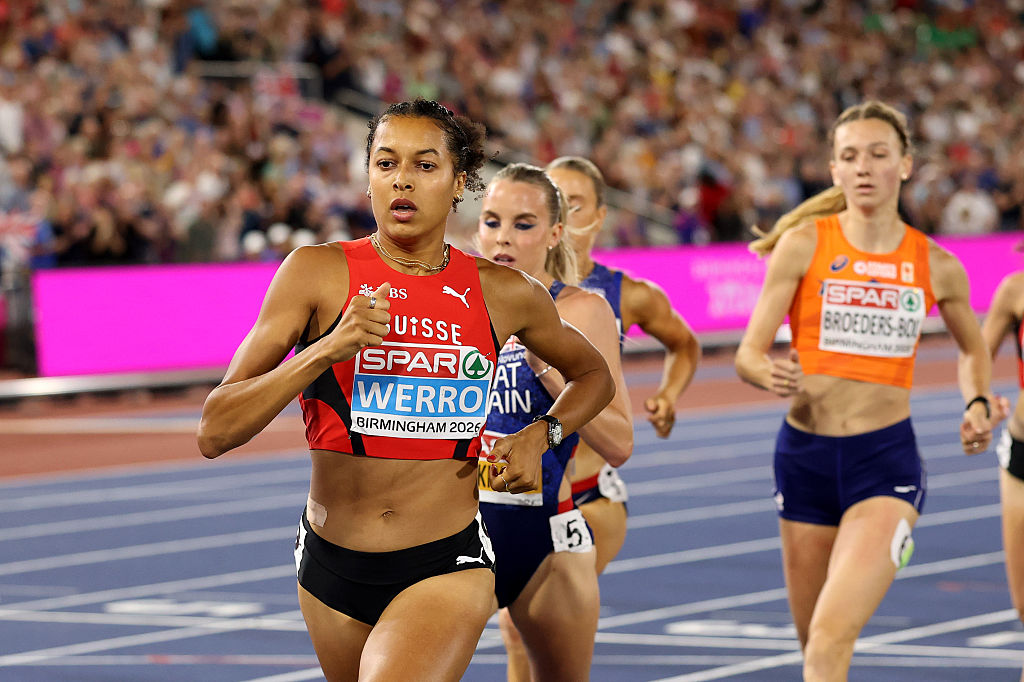
For years, Werro continued to compete across events. She jumped, threw and sprinted alongside the 600m and 1000m. In 2021, the same year she won her first European U20 title, she also broke the Swiss U18 pentathlon record.
“All of these skills were developed through a playful approach to keep the athletes engaged, interested and motivated,” Christiane says.
No single path to the top
Werro’s training is, inevitably, much more specialised now. But even today, Berset Nuoffer rarely programmes exactly the same session twice. She still wants variety, new challenges and enough unpredictability to stop training becoming mechanical.
That approach says a lot about the way she thinks about development.
“There is no single path to elite sport,” she says. “You must manage early talent carefully to achieve ideal long-term progress.”
The temptation with an obviously talented young athlete is to accelerate everything. Christiane’s view is that some things are better left for later.
“You should not push all the performance levers too early,” she says. “By doing this, you guarantee consistency and continuity in their training over time.”
From teacher to partner
Training isn’t the only thing that has changed during their 13 years together.
When Werro was a child, Christiane describes herself primarily as a mentor and educator. Her job was to provide structure, teach the basics and guide the young athlete through the sport.
But adolescence required a different approach.
“As she went through puberty and adolescence, a phase filled with unique challenges for young athletes, I was always deeply committed to being highly attentive, figuring out exactly how far to push her while ensuring her well-being,” she says.
Today, she describes their relationship as an “adult-to-adult partnership”.
“Her physical feedback and feelings matter just as much as my technical expertise,” Christiane says. “Our communication is open and built on transparency and total trust.”
That evolution is particularly important in a relationship that began when the athlete was still a child.
A 22-year-old international athlete can’t be coached in the same way as the 12-year-old version of herself. Greater experience brings greater ownership, and the coach has to be prepared to give some of that control away.
Christiane describes the change as moving from being a “teacher” to becoming a “strategic partner who supports their autonomy”.
Trust is what makes that possible. For Christiane, it comes through communication that is direct and honest, but also empathetic. And after more than a decade together, it rests on much more than successful races.
“This kind of trust isn’t built overnight,” she says. “It is earned day after day, through shared successes but also through hard times and vulnerabilities.”
Because they have gone through those periods together, she says, Werro knows that decisions are being made with both her career and her wellbeing in mind.
When the plan changes
One of the more difficult periods came in 2024.
Werro suffered a hamstring injury in March, immediately changing the shape of the season. Preparation became focused on getting her back to fitness in time to qualify for the Paris Olympic Games.
She made it to Paris, but then missed out on the 800m semi-finals.
It would have been easy to see the year only in terms of what went wrong. Christiane views it a bit differently.
“It was a challenging year, but it taught us so many valuable lessons,” she says. “Going through those tough moments forced her to grow mentally, and it built the resilience and self-assuredness that we are seeing on the track now.”
That season sits in contrast to an earlier moment when Christiane first began to believe Werro could reach the very top.
It came at the European U20 Championships in Tallinn in 2021.
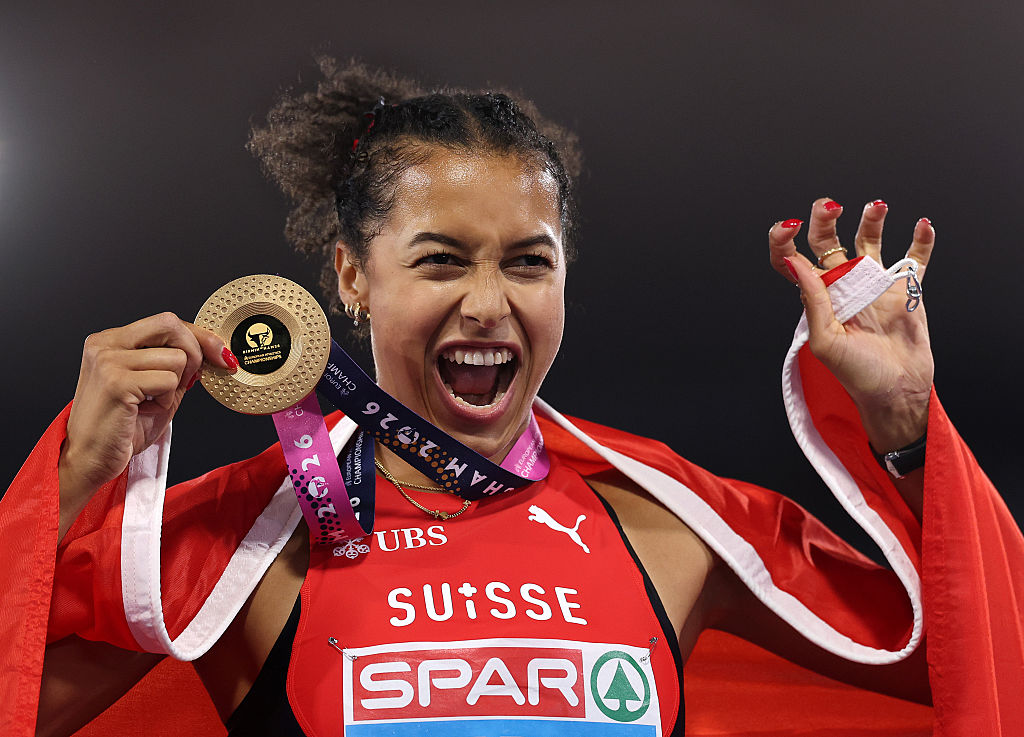
Werro was 17 and competing at her first official international championship outside Switzerland. She won the 800m title.
But for her coach, the result was only part of what stood out.
“She was already so incredibly comfortable and at ease in that environment,” Christiane says. “That was when I truly realised she had that little something extra that could take her to the very highest level.”
That composure is difficult to coach directly. But creating an environment in which an athlete feels prepared and secure is very much part of the job.
Before a major championship, Christiane takes care of the practical structure around Werro’s preparation, such as the track sessions, competition readiness and timetable.
As race day gets closer, the emphasis shifts.
“The closer we get to the event, the more my role shifts towards supporting and reassuring her if necessary,” she says.
That support now comes from a wider team too, including Werro’s mental coach.
Reading between the lines
Modern high-performance coaching comes with more information than ever.
Training loads can be monitored closely, performance can be broken down through data, and recovery, strength and conditioning, biomechanics and physiology can all inform decisions.
Christiane values that detail highly. But when asked what separates a good coach from someone who can simply write a good training plan, she talks about things that are much harder to measure.
“You must know how to engage in dialogue with the athlete and learn to ‘read between the lines’ to instantly spot if they are feeling tired or preoccupied,” she says.
“Above all, I make sure the athlete feels good as a human being in their everyday life.”
That doesn’t mean the coach has to solve everything personally.
In fact, one of the things Christiane says she has learned through working with high-performance athletes is the importance of knowing her own limits.
Sports psychology and mental coaching are areas where she is comfortable bringing in specialist expertise rather than trying to cover every part of the athlete’s development herself.
“It has shown me how to clearly define my own limits, focusing on where I can bring the most value while trusting other experts to support the athlete’s overall growth,” she says.
That willingness to keep learning, and to learn from other people, is another theme that runs through her coaching.
Christiane had experience taking athletes from youth to adulthood before Werro came along, but she says working at the highest level still requires her to question what she is doing and keep developing professionally.
She has recently completed Switzerland’s Advanced Federal Diploma of Higher Education for Elite Sports Coaches, the country’s highest coaching qualification. Just as importantly, she continues to exchange ideas with other coaches and draw on the experience around her.
No coach has all the answers
That exchange of knowledge is becoming an increasingly important part of European Athletics’ approach to coach development.
Across Europe, there’s an enormous amount of coaching expertise sitting within clubs, Member Federations and individual disciplines. The challenge is making it easier for that knowledge to move between people rather than remaining within individual training groups or national systems.
The Coaching Summit Series and European Athletics’ wider coach education activity are designed in part around that idea, of creating places where coaches can discuss methods, compare experiences and hear from people working in different environments.
The Coach Networking Project takes the same principle further by connecting developing coaches directly with more experienced peers across Member Federations and disciplines.
For Christiane, the value of that kind of exchange is simple.
“We can always learn a lot from our peers,” she says. “The most important thing is to stay open to new concepts and be ready to try innovative approaches.”
Then comes the line that perhaps best explains why mentoring and stronger coaching networks matter.
“No coach has all the answers.”
It’s an obvious statement, but an important one in an environment where coaches are often judged publicly by the performances of one athlete.
The strongest coaching relationships are rarely the product of one person possessing all the knowledge. They draw on other coaches, support staff, education and years of accumulated experience.
European Athletics’ work around networking and knowledge-sharing recognises that developing better athletes also means giving coaches opportunities to develop themselves throughout their careers.
And Christiane’s relationship with Werro is a useful example of why that development cannot stop once results begin to arrive.
The athlete she coaches today is not the athlete who arrived at a youth session aged nine. The demands are different, the training is different, the people around her are different, and the coach has had to change too.
What's remained is the continuity.
Christiane was there when Werro was learning to run, jump and throw. She was there when Tallinn suggested something bigger might be possible. She was there through the injury and disappointment of 2024, and she is still there now as the relationship becomes increasingly collaborative.
Thirteen years into their partnership, both athlete and coach have continued to evolve, while their working relationship has remained incredibly consistent.