



Following the European Athletics Convention in Batumi in October 2025, where good governance was included on the programme and generated a high level of interest among participants, European Athletics has continued its commitment to supporting Member Federations through a series of targeted educational initiatives designed to further strengthen governance practices across the sport.
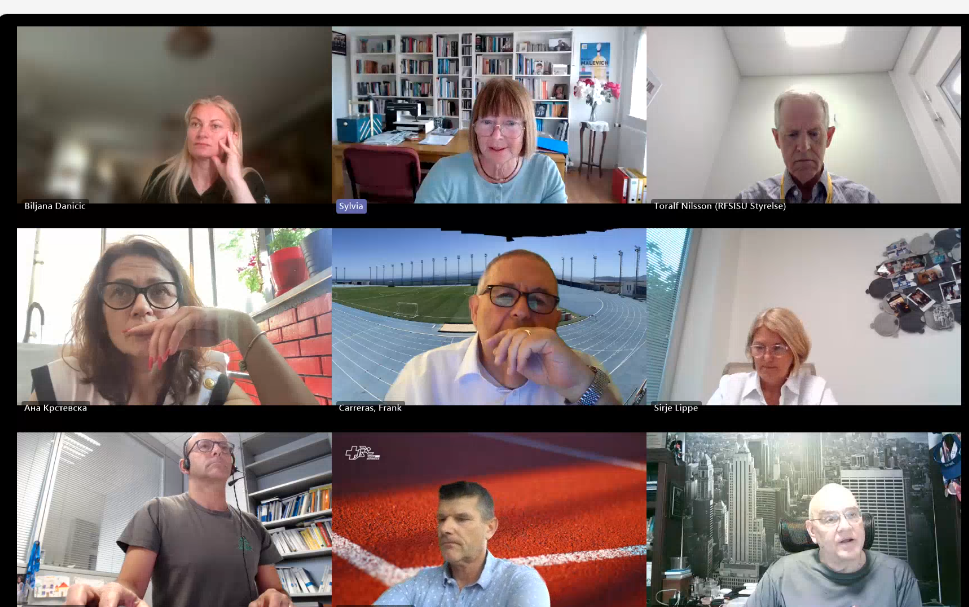
Over the past three months, representatives from Member Federations have come together for the European Athletics Governance Online Workshop Series, dedicated to strengthening governance practices and fostering a culture of integrity, transparency, and accountability across the athletics community.
The three workshop sessions were facilitated by Sylvia Barlag, Ami Baran, and Frank Carreras, all of whom are members of the European Athletics Governance and Integrity Commission and actively contribute to the Member Federations Governance Working Group.
Bringing extensive expertise in sports governance, integrity, and organisational development, they played a key role in guiding discussions, sharing international best practices, and encouraging federations to reflect critically on their own governance structures.
“Good governance is the cornerstone of the credibility and long-term sustainability of our sport. It ensures that athletics remains fair, transparent, and accountable, and that it continues to earn and deserve the unwavering trust of athletes, fans, partners, and the wider public.
"This is why we are placing education at the very heart of our work, strengthening and expanding structured learning opportunities across our Member Federations to reinforce governance at every level.
"From the Convention 2025 in Batumi, the CEO Conference 2026 in Baku, through three dedicated online workshops and to our upcoming the Convention 2026 in Lausanne, we are establishing a continuous and coherent pathway of educational initiatives that empower our leaders to serve with integrity, responsibility, and excellence" said President Dobromir Karamarinov.
This guiding principle shaped all three workshops, which focused on the core pillars of good governance:
- Integrity – 25 March 2026
- Transparency – 29 April 2026
- Accountability – 27 May 2026
@: -
Learning Together to Strengthen Governance
The online workshops reinforced that good governance goes beyond policies and requires continuous education, practical application, and learning from shared experience.
Participants discussed real governance challenges, exchanged best practices, and identified solutions adaptable to their own federations.
This peer-learning approach proved especially valuable, enabling federations of all sizes to benefit from the collective experience of the European Athletics community.
Integrity: Protecting the Future of Athletics
The first workshop focused on integrity and the foundations required to build and maintain trust within sport.
Discussions centred on the implementation of integrity policies, the management of conflicts of interest, and the development of governance cultures that prioritise safeguarding and ethical conduct.
Participants examined how governance weaknesses, including poor transparency and accountability, can create integrity risks and undermine public confidence in athletics.
Leading the session, Frank Carreras highlighted the broader importance of integrity within sport.
"By building trust and sustaining credibility, integrity creates the foundation upon which the future of athletics is built. It is the guiding principle that ensures competition remains fair, achievements are earned, and the values of sportsmanship are upheld," he said.
Transparency: Building Trust Through Engagement
The second workshop focused on transparency and stakeholder communication, recognising that trust is strengthened when organisations communicate openly and involve stakeholders in decision-making processes.
Participants identified several common challenges facing federations, including the lack of detailed strategic action plans and measurable objectives, inconsistent communication practices, limited stakeholder involvement, and balancing transparency with operational realities.
The management of confidential information was also discussed, including GDPR compliance, safeguarding-related information, disciplinary matters, and the need for clear confidentiality procedures.
Workshop facilitator Sylvia Barlag emphasised that transparency extends far beyond simply publishing information. "Transparency is not only about publishing information. Open consultation of a federation's stakeholders and consistent communication are key to creating acceptable and workable strategic action plans," she said.
A common conclusion from the discussions was that stronger transparency requires clearer reporting structures, regular stakeholder consultation, transparent communication of decisions, and robust data protection frameworks.
Accountability: Turning Governance Principles into Practice
The final workshop examined accountability as a cornerstone of effective governance.
Participants discussed how accountability helps ensure that responsibilities, decisions, and resources are managed fairly, ethically, and in accordance with agreed standards. The session explored governance, operational, financial, ethical, and organisational dimensions of accountability.
Key topics included board oversight, performance evaluation, financial controls, safeguarding responsibilities, and mechanisms for monitoring the implementation of policies and decisions.
Workshop facilitator Ami Baran reminded participants that accountability must go beyond documentation:
"Accountability is not about having policies; it is about ensuring they are implemented, reviewed, and improved."
Discussions highlighted that accountability is essential for maintaining trust among athletes, clubs, sponsors, partners, and the wider public, while also ensuring that organisations continue to learn and improve.
Continuing the Governance Journey
“The completion of the online workshop series marks another important step in European Athletics' ongoing commitment to supporting Member Federations in developing stronger governance structures,” said European Athletics First Vice President and Chair of the Governance and Integrity Commission, Jean Gracia.
He added: “The discussions demonstrated that while federations may face different challenges, they share common objectives: protecting the integrity of athletics, strengthening transparency, improving accountability, and creating safe and ethical sporting environments.
"By bringing federations together to exchange experiences and practical solutions, European Athletics continues to build a stronger governance culture across the continent.”
European Athletics would also like to warmly thank the speakers Sylvia Barlag, Ami Baran, and Frank Carreras for their time, expertise, and for their key role in designing, preparing, and delivering the entire workshop series, as well as for their valuable contribution in facilitating the discussions and shaping the overall programme.